




Philadelphia’s underground carries more history than almost any American city. Portions of the collection system trace back to combined sewers built in the 1800s, and the city’s rowhouse density means laterals, connections, and mains sit closer together than in almost any other major metro.
For engineers and contractors managing sewer rehabilitation across Philadelphia and the surrounding counties, inflow and infiltration (I&I) is a defining challenge under the city’s long-term Green City, Clean Waters consent decree. PWD’s ongoing I&I reduction work has kept the pressure on as recent heavy rain events continue to test an aging combined sewer system.
Density Creates Two Distinct Leak Pathways
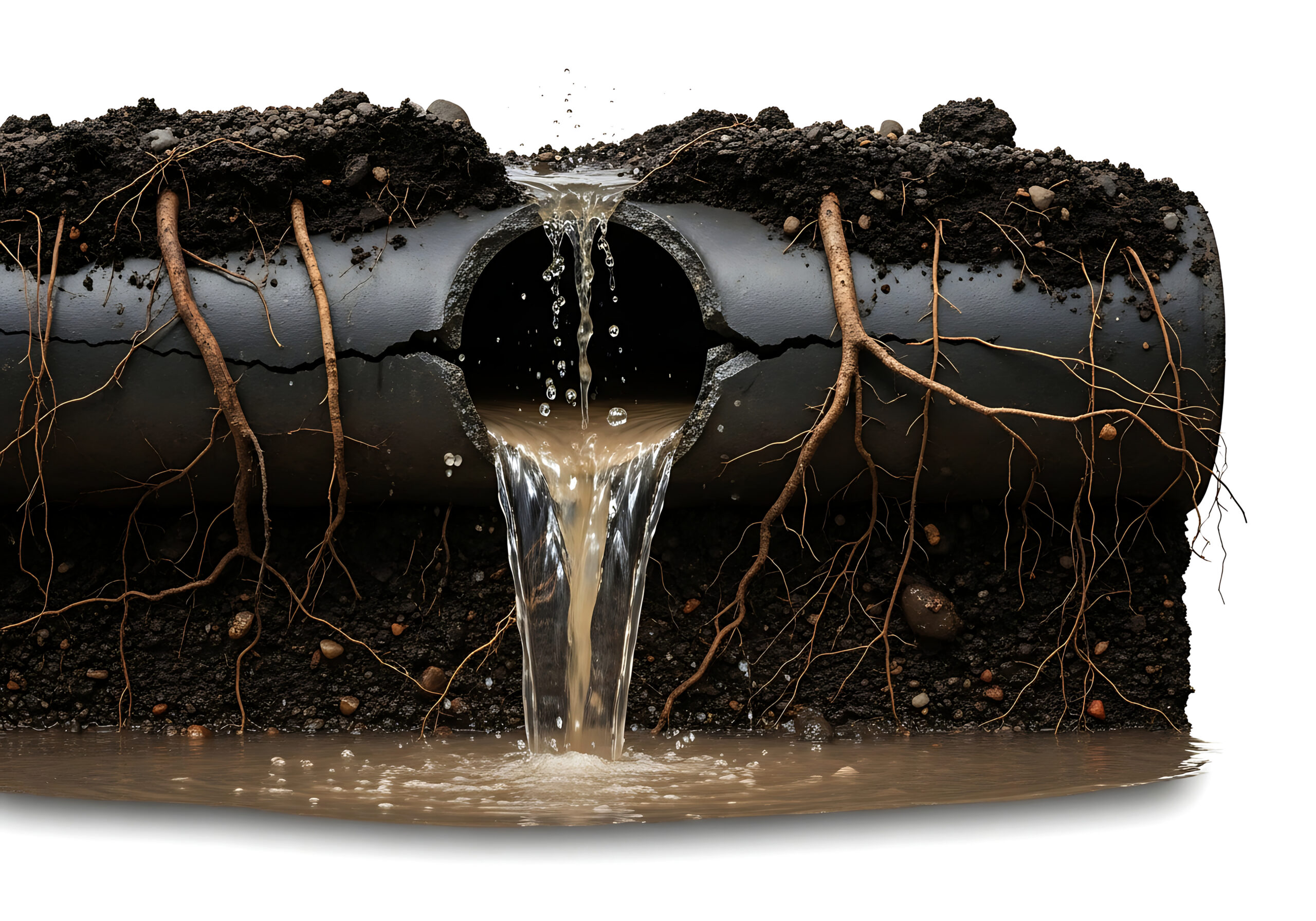
Cracked pipes, aging joints, and worn manhole seals let groundwater into Philadelphia’s collection system, standard infiltration. Inflow enters directly, through roof drains, foundation drains, and other connections tied straight into the sanitary side.
Both draw down sewer capacity fast in a city where combined sewers still carry the majority of flow. Philadelphia’s rowhouse neighborhoods route stormwater and sewage through the same aging pipes, so every gallon of excess groundwater competes directly with the sewage that has to reach treatment during a storm.
What Row-House Density Hides From the Inspector
Philadelphia crews use CIPP to renew deteriorated mains beneath dense rowhouse blocks without the disruptive open-cut work that neighborhood layout would otherwise demand. Fixing the trunk line, though, doesn’t reach the maze of laterals packed in around it.
Lining a main in Philadelphia doesn’t guarantee the infiltration numbers come down, because colonial-era and early-20th-century laterals sit so close to century-old mains that the connections between them fail entirely on their own. A rowhouse lateral running under a shared party wall can leak for years without anyone noticing until the main gets inspected.
Common infiltration sources across Philadelphia’s neighborhoods include:
- Deteriorated laterals beneath older South Philadelphia and Kensington rowhouse blocks
- Failed main-to-lateral connections stressed by dense, tightly packed underground infrastructure
- Cracked host pipes weakened by more than a century of continuous service
- Manhole joint failures allowing groundwater intrusion near Schuylkill and Delaware River corridors
- Root intrusion into aging clay and brick pipe common throughout the city’s historic districts
Assessing a Dense, Historic Layout Before Acting
Philadelphia’s rowhouse density makes it hard to isolate a defect by sight alone, which is why engineers pair CCTV inspection with flow monitoring and smoke testing to confirm whether the leak sits at the main, the lateral, the connection, or the structure itself.
Once the defect is identified, the rehabilitation approach follows it: mainline CIPP for structural trunk-line deterioration; full lateral lining for a compromised service line; connection-specific rehab where dense underground conditions have separated a joint; structural manhole work where river-adjacent groundwater pressure has cracked a structure; and injection grouting for a small, active, isolated leak.
What’s at Stake for Engineers and Contractors
PWD works under its long-term Green City, Clean Waters commitments to control the ongoing cost of pumping and treating unwanted groundwater. Sewer overflows during heavy rain carry real regulatory consequences in a city still executing a multi-decade combined sewer overflow program.
A system this dense and this old needs to be managed as one connected network rather than a series of unrelated repairs. The mainline liner solves the trunk-line problem; the tightly packed laterals and connections running beside it are where the real infiltration reduction actually happens.
Find a WRT-certified installer serving the Philadelphia metro area to assess your collection system’s full scope of I&I sources.