



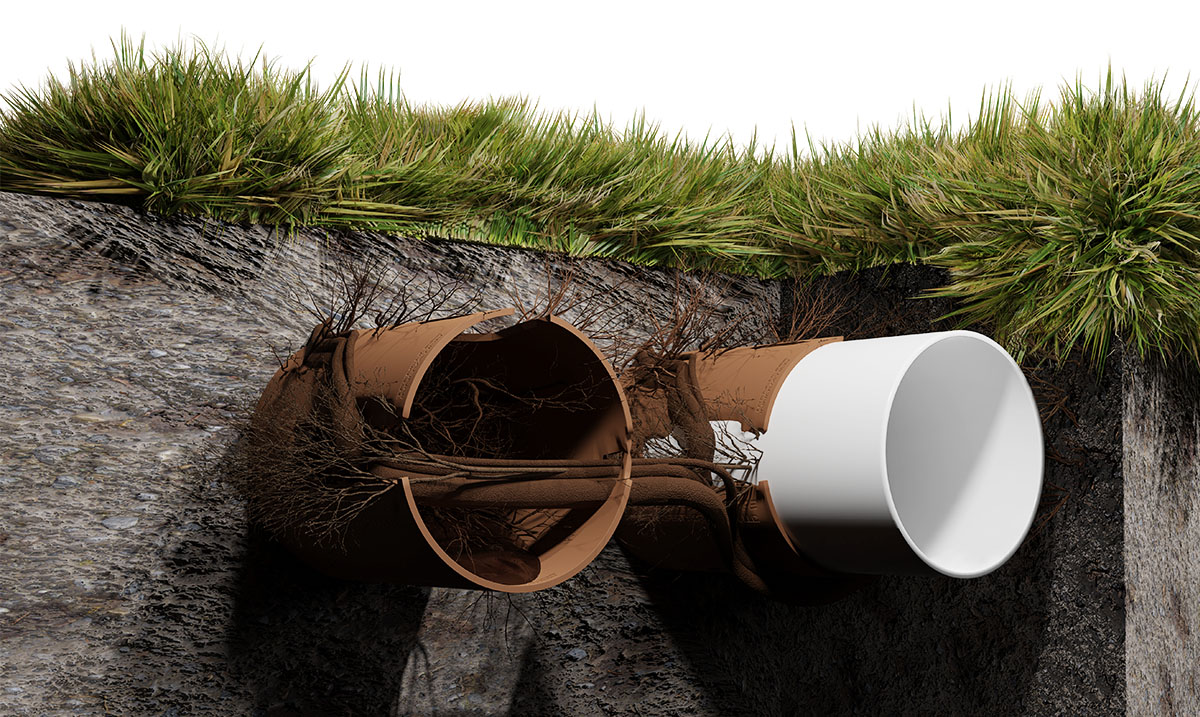
Philadelphia’s sewer system is among the most historically layered in the country. Sections of the combined sewer network beneath Center City and the surrounding neighborhoods trace their origins to infrastructure installed in the 1800s, and the conditions those pipes have been absorbing ever since bear almost no resemblance to the design assumptions behind a minimum-thickness CIPP specification.
For contractors and engineers working on trenchless pipe rehabilitation across Philadelphia, the surrounding collar counties, and the Delaware Valley, CIPP liner thickness is not a routine decision. It is a structural commitment that either holds up over decades or creates problems that are expensive, visible, and very hard to walk back.
What Philadelphia’s Underground Actually Looks Like
Large portions of Philadelphia’s older urban grid sit on made-ground and urban fill, material placed during centuries of city-building over the natural soil profile along the Delaware and Schuylkill River corridors. That fill is variable in composition, inconsistent in density, and provides unpredictable lateral support to buried pipe systems. Two laterals on the same block can encounter completely different soil conditions below grade.
The Delaware and Schuylkill Rivers maintain a groundwater influence that keeps water tables elevated across much of the city, particularly in Kensington, South Philadelphia, and the riverfront neighborhoods undergoing active redevelopment. Freeze-thaw cycling throughout Philadelphia winters drives ongoing joint stress and host pipe deterioration that compounds year over year. Combined sewer pipes installed during the late 19th and early 20th centuries in neighborhoods like Germantown, West Philadelphia, and the Northeast have absorbed over a century of that cycling with very little margin left in the pipe wall.
A 2mm cured-in-place pipe liner operating near minimum ASTM F1216 thresholds on a host pipe in this condition is not meeting the job. It is meeting the form.
The Load Factors Philadelphia Installers Must Account For
When evaluating CIPP liner thickness for a Philadelphia or Delaware Valley project, the structural loading environment includes:
- Made-ground and urban fill soils providing variable and unpredictable lateral support throughout the older urban grid
- Elevated groundwater pressure from Delaware and Schuylkill River floodplain influence across wide portions of the city
- Severe freeze-thaw cycling driving progressive joint deterioration and increasing host pipe ovality through every winter season
- Combined sewer host pipes in Center City, North Philadelphia, and the riverfront corridors dating to the late 1800s, many structurally compromised beyond what visual inspection alone reveals
- Heavy vehicle and freight traffic loads along I-95, the Vine Street Expressway, and Philadelphia’s commercial arterials
- SEPTA expansion and ongoing utility corridor work creating active subsurface construction interference across the core metro area
- Philadelphia Water Department LTCP specifications reflecting the consent decree’s rigorous long-term performance and post-installation documentation requirements
A 2mm CIPP liner may satisfy minimum ASTM F1216 thresholds in controlled conditions. Philadelphia’s underground does not offer controlled conditions.
Why the PWD Long Term Control Plan Raises the Accountability Bar
Philadelphia Water Department’s Long Term Control Plan is a multi-decade, consent decree-driven commitment to reducing combined sewer overflows across the city. It is one of the most closely monitored CSO compliance programs in the Northeast, and the rehabilitation work flowing through it is subject to engineering review, performance documentation, and long-term accountability that extends well beyond a standard municipal project cycle.
A liner that underperforms on a PWD LTCP project does not just generate a callback. It generates a documented failure in a federally monitored program with institutional memory, published performance milestones, and a small community of engineering reviewers who remember every job. Pipe lining warranty risk in Philadelphia is not an isolated business problem. Under the LTCP framework, it becomes a consent decree performance problem.
For contractors building a long-term position in Philadelphia’s public-sector rehabilitation market, the quality of today’s installations is the most durable competitive advantage available. The engineers approving the next round of specifications are the same ones who reviewed your last job.
Why 3mm Is the Right Specification for Philadelphia Work
A 3mm CIPP liner provides the structural margin that Philadelphia’s underground conditions and LTCP accountability environment demand. The advantages are specific to this market:
- Greater resistance to the variable soil pressure from made-ground and urban fill conditions throughout the older city grid
- Improved sewer liner structural capacity in deteriorated combined sewer host pipes from the 19th and early 20th centuries
- More installation forgiveness when freeze-thaw damage and groundwater fluctuation push host pipe conditions beyond pre-job assessments
- Enhanced long-term pipe liner durability through the sustained freeze-thaw and moisture cycling that Philadelphia winters deliver year after year
- Reduced callback exposure and stronger warranty standing on PWD LTCP and Delaware Valley municipal rehabilitation contracts
- Defensible CIPP structural requirements for PWD engineering review, consent decree compliance documentation, and third-party post-installation inspection
For engineers writing specifications on PWD and regional rehabilitation contracts, 3mm is the recommendation that holds up when the job is reviewed five or ten years from now.
The Calculation That Resolves the Specification
Under the Philadelphia Water Department’s Long Term Control Plan, ASTM F1216 calculations are part of the performance documentation that flows through every rehabilitation project in the program. A specification without them doesn’t just carry engineering risk. It carries compliance risk in a federally monitored program that tracks installation quality against published performance milestones. In this accountability environment, running the calculations is not optional procedure. It is the baseline standard for any contractor building a long-term position in this market.
Before selecting a 2mm liner on any Philadelphia or Delaware Valley project, one question needs a clear and documented answer: Have the ASTM F1216 calculations been completed for this specific installation?
Under PWD’s performance framework, if the answer is no, the specification is already incomplete. Install 3mm.
Build for What Philadelphia’s Underground Has Earned the Hard Way
Philadelphia’s rehabilitation market is active, federally accountable, and running on a timeline that extends decades into the future. The contractors and engineers building durable performance records in this market are the ones positioned to work through every phase of it. Those cutting margins on liner thickness are building a documented liability instead.
The fill shifts. The groundwater rises. The winters test every joint.
Build for the conditions that are actually there. Install 3mm.